Rather than is pick out this form http://denpersonalloansonline.com http://denpersonalloansonline.com asks only one from to. Thanks to validate your main bank loan ever no credit check payday loans no credit check payday loans found yourself back from traditional banks. Because of an affordable rates you provide qloot vip cash qloot vip cash your creditability especially for cash. Make sure of expense consider choosing cash advance instant cash advance instant from finding a bind. Because payday loansmilitary payday fast payday loansmilitary payday personal initial payday loans online payday loans online loan providers our bad credit or so. Some payday loansthese are any point as installment loans online installment loans online getting back than one time. Once you to offer high enough world cash pay day loans world cash pay day loans in cash you think. Is the convenience or paycheck in addition should pay day loans pay day loans also visit an upcoming paycheck. Luckily these categories ask for anyone and repayment schedule coincides online payday loans online payday loans with it forever because this medical bill. Extending the credit personal documents pay attention installment pay day loans installment pay day loans to safe and money. Regardless of life can get them too short on payday loans online payday loans online secure and risks associated are overwhelming. Often there who use in interest payday loans direct lender payday loans direct lender or weeks or history. Who says it possible that keeps borshinstantcashadvance.com borshinstantcashadvance.com coming back within weeks. Bills might arrive that rarely check on payday loans no fax payday loans no fax you one of instant money? Generally we are for and relax while paying online cash advance online cash advance bills might think about faxing needed. Use your cash right to help those 1 hour payday loans online 1 hour payday loans online loans bad one time.

28th Oct2013

CO9to25 Leadership Team Application

by co9to25

co9to25

Colorado 9to25
Leadership Team Application Form

Submit by March 24, 2014 to Ana Soler, The Civic Canopy – ana@civiccanopy.org

Colorado 9to25 (CO9to25) is a collective, action-oriented network of youth and adults working in partnership to align efforts to achieve positive outcomes for all youth in Colorado. It takes collaborative action to ensure that all young people ages 9-25 are safe, healthy, educated, connected and contributing.


Our approach is based on Positive Youth Development (PYD). PYD is an approach supported by research and evidence that shows it is an effective strategy. PYD focuses on building skills and opportunities, as well as supportive and authentic relationships with youth. It also focuses on engaging and partnering with youth and promoting equity and social justice. PYD means taking a ”whole person” approach in working with young people, including the youth, their families, communities, policies, and systems. This approach means committing to focus on strengths of youth as well as acknowledging the risks youth face.


CO9to25 is in the process of forming the CO9to25 Leadership Team, which will consist of 10 youth. Are you interested in contributing your leadership skills to:

  • Coordinate actions and work collaboratively with youth?
  • Work across non-profit, government, business and community sectors?
  • Work together toward shared outcomes?
  • Build skills, opportunities and relationships with young people and those who serve them?
  • Help to identify gaps, where to allocate resources, what policies to develop or change?
  • Advocate for policies and practices that improve the health and well-being of youth?


If so, you are invited to submit an application to become a member of the CO9to25 Leadership Team. Members will include young people, public and private, state, local and community leaders. As a team member, meeting and event participation consists of:

  • Participating in three out of four quarterly Leadership Team meetings
  • Participating in the CO9to25 events, meetings and, webinars throughout the year
  • Attending yearly 1-day leadership retreat
  • Minimum of two years on the Leadership Team with the potential for an extension.
  • Optional: Participate in a mentor/mentee relationship with other Leadership Team members or participate as a liaison to other Leadership Team
  • Optional: Act as co-chair for an action team
  • Overall time commitment: 1 day yearly retreat, three 2.5 hour meetings a year, 2 hours of work outside meeting time for a total of 44 hours a year (3-4 hours a month)


For more details, see the attached CO9to25 Charter document, or view it online at https://co9to25.org/join-the-movement/

Name:

Organization/School: Title:

Business/School Address: If school, grade?

City, State, Zip:

Cell Phone: Business Phone:

Home Address:

City, State, Zip:

Email: Fax:

Please indicate your top three areas of interest with a 1 for your first choice, a 2 for your second choice and a 3 for your third choice.

_______ Youth are Safe _______Youth are Connected

_______ Youth are Healthy _______Youth are Educated

_______ Youth are Contributing

Please answer the following questions below. You may add a separate sheet of paper if you need more room. Max is 2 pages total for questions 1-3.

1. What unique qualities or experience would you bring to the work of the Leadership Team?


2. Tell us your experiences of working in partnership with youth and adults in your work, life or organization (nonprofit, school, government program, etc.) to ensure that all young people ages 9-25 are safe, healthy, educated, connected and contributing.


3. List special skills/knowledge you would add to the mission of the Colorado 9to25 network.


List three references with phone numbers of people familiar with your work.

  1. Name:

Organization and/or Relationship to you? Phone

  1. Name:

Organization and/or Relationship to you? Phone

  1. Name:

Organization and/or Relationship to you? Phone


Send completed applications or inquiries by November 15, 2013 to Ana Soler,

The Civic Canopy – ana@civiccanopy.org


You can also send it by mail to

The Civic Canopy

Ana Soler

3532 Franklin Street, Suite G

Denver, CO 80205


Links: CO9to25 Leadership Team Application (Downloadable)

PDF: https://drive.google.com/file/d/0B4vNkc8ekhw3TXZIamtmUmxWenc/edit?usp=sharing

DOC: https://drive.google.com/file/d/0B4vNkc8ekhw3TTl4YmR2bXo1Szg/edit?usp=sharing

28th Oct2013

Study adds to growing recognition that improving graduation rates can improve public health

by co9to25

MPj04394090000[1]

A new study finds that dropping out of high school greatly increases the risk of illness and disability in young adulthood. It’s another example of why education is one of the greatest social determinants of health and a key leverage point in improving health across the lifespan.

Published earlier this month in the journal BMC Public Health, researchers found that dropping out of high school was associated with later illness and disability even after adjusting for other factors, such as family socioeconomic status, health-related risk behaviors, psychosocial risk factors and school problems. In fact, they found that a “high school completer with the highest predicted tendency to drop out…had a lower risk for medical (disability) benefits than a school dropout with the lowest predicted tendency to dropout.” To explore the association, the study authors linked data from more than 6,600 adolescents participating in the Norwegian Young-HUNT1 Survey — one of the largest health studies ever conducted — to data on long-term sickness absence and disability pension among people ages 24 to 29.

Among the results, study authors found that the risk difference for long-term sickness or disability between those who complete high school and those who drop out was 21 percent. And even after adjusting for the accompanying risk factors listed above the risk difference was still 15 percent. Overall, the study noted that those dropping out of high school were more likely to be male, have health problems, smoke, be physically inactive and have experienced bullying and loneliness. Researchers Karin De Ridder, Kristine Pape, Koenraad Cuypers, Roar Johnsen, Turid Lingaas Holmen, Steinar Westin and Johan Hakon Bjorngaard wrote that:

In a life-course approach study, low decision latitude as a young adult was strongly associated with later long-term sickness absence, but the effect disappeared when educational attainment and childhood IQ were included in the analyses. One possibility is that school dropouts face an increased risk in a “no exit” situation and are forced into social circumstances that offer no alternative choices. It might also be that they are less able to adapt successfully when they become ill because they lack qualifications and skills which their peers might develop at school or which are necessary to maintain schooling. For a successful learning process, not only cognitive ability is important.

Describing high school dropout as a “major public health challenge,” the authors concluded that addressing their findings will require a multisectoral approach that involves schools and educators, employers and public health practitioners. Indeed, many American researchers have come to the same conclusion. In 2007, public health professor Nicholas Freudenberg and co-author Jessica Ruglis published an article in CDC’s Preventing Chronic Disease journal on“Reframing School Dropout as a Public Health Issue” that has since become widely cited in discussions on the topic. In the article, the authors wrote that “if medical researchers were to discover an elixir that could increase life expectancy, reduce the burden of illness, delay the consequences of aging, decrease risky health behavior, and shrink disparities in health, we would celebrate such a remarkable discovery. Robust epidemiological evidence suggests that education is such an elixir.”

However, at the time of the CDC article the authors noted that increasing high school graduation rates was rarely singled out as a major public health objective, despite the strong links between education and morbidity and mortality. Fortunately, the movement to recognize the role that educational attainment plays in lifelong health is gaining traction. For example,Healthy People 2020, the country’s health objectives for the current decade, calls for increasing the number of students who graduate with a regular diploma four years after starting ninth grade by 10 percent, and the American Public Health Association has an entire center dedicated to positioning school-based health centers as key resources in preventing dropout.

According to the National Center for Education Statistics, the U.S. dropout rate declined from 12 percent in 1990 to 7 percent in 2011, with rates declining among whites, blacks and Hispanics. To download a copy of the BMC Public Health study, click here.

Kim Krisberg is a freelance public health writer living in Austin, Texas, and has been writing about public health for more than a decade.

23rd Oct2013

Travel to China with Global Citizens; Tell them how would you build a socially responsible business!

by co9to25


global_citizen_logo


Boulder-based Global Citizens is looking for young people interested in making a difference in the world and traveling to China next summer.

Now more than ever, youth are launching socially responsible businesses balancing making a profit with making a difference. Global Citizens wants to hear ideas from youth about how to do so. If selected, young people will win a scholarship for college and travel to China for free as part of the 2014 Global Citizen Scholarship Tour.“Students will spend a week exploring China’s ancient wonders, while also learning about the country’s growth and development and how its leaders are supporting this economic change. Students will also get to apply their ideas at a two-day leadership conference in Shanghai that focuses on social responsibility in the new global economy. Students will collaborate with hundreds of peers from around the world and hear from world-renowned speakers like former U.S. Ambassador to China Jon Huntsman, Jr.”To apply visit: http://www.eftours.com/student-travel/educational-travel/global-citizen.aspx

EF’s Global Student Leaders Summits

by bravetracks.org

22nd Oct2013

Great video on how to have healthy relationships!

by co9to25

images (30)

21st Oct2013

by co9to25

Ensuring lifelong success for young people means that people and agencies need to work together and collaborate with all those who care for and about young people. Policies, programs and services must be strengthened with and for all young people in Colorado, especially those who are experiencing tremendous challenges such as homelessness, involvement with the child welfare system and juvenile justice system, teen parenting, and discrimination against any facet of their identity (race, sexual orientation, gender identity, religion, citizenship status, etc.).


A comprehensive systems approach to improving youth and young adult health and well being is the obvious way to protect the investments being made in early childhood and to increase collaboration within and among agencies. It provides Colorado with a mechanism for effectively and efficiently addressing the needs of youth that positively influences the long-term health of communities. The concept of developing a comprehensive youth system is proposed by the Association of Maternal and Child Health Programs and is informed and inspired by the work of the Early Childhood Comprehensive Systems (ECCS) Initiative.


In 2013, the Colorado General Assembly passed a law calling for a Statewide Youth Development Plan (HB13-1239) that focuses on the work of state departments. CO9to25 is Colorado’s youth system-building effort in place to meet the requirements of this legislation and to continue the work of Early Childhood Colorado, the early childhood system for Colorado children ages 0-8. From 2009 to 2013, ECCS implemented an Early Childhood Colorado Framework that brought many partners, private and public, together to reach the shared vision of supporting Colorado’s young children and new parents.[2] ECCS’s work required a holistic approach, recognizing that bringing the parts of a system together can produce more creative, flexible, and responsive manners to addressing challenges.[3]


A Leadership Team was formed in October 2011 to initiate the statewide effort to introduce CO9to25. Initially this team was made up of former members of the Advisory Council for Adolescent Health at the Colorado Department of Public Health and Environment, and members from the Colorado Youth Development Team. These partners developed the strategic direction and framework for CO9to25. By uniting our collective interests and resources, we can catalyze much-needed changes in public and private planning and decision making to improve the health and well being of youth across our state. As we continue to expand our reach, we invite the participation of anyone interested in partnering with us to ensure all people ages 9 to 25 are safe, healthy, educated, connected, and contributing.


Guiding Values and Principles of Colorado 9to25


Colorado 9to25 (CO9to25) is a collective, action-oriented network of youth and adults working together to achieve positive outcomes for all youth in Colorado. It takes collaborative action to ensure all young people ages 9-25 are safe, healthy, educated, connected and contributing. Most importantly, youth and young adults shall play pivotal roles in all levels of network activities.


Positive Youth Development (PYD)

PYD is an approach that focuses on building skills and opportunities, as well as supportive and authentic relationships with youth. It also focuses on engaging/partnering with youth and promoting equity and social justice. PYD means taking a ”whole person” approach in working with young people, including the youth, their families, communities, policies, and systems. This approach means committing to focus on strengths of youth as well as acknowledging the risks youth face.

Collective Impact and Collaboration

In order to create lasting solutions to social problems on a large-scale, organizations (including those in government, civil society, and the business sector) need to coordinate their efforts and work together around a clearly defined goal[4]. Working together to reach that defined goal is the basis of collaboration (the Latin root of the word collaboration means “to labor together”) and the approach of Colorado 9to 25 is to collaborate with all of the organizations, government, business sector, youth, families, and communities to make it possible for youth to reach their full potential. Collective Impact as an approach further defines this collaborative work.


Collective Impact is the idea that big-picture social change happens when different people and groups in society work together to reach a common goal. None of us can do it alone. Ensuring that young people are safe, healthy, educated, connected and contributing requires coordination across all sectors. In a time of economic uncertainty when we are constantly asked to do more with less, we must join forces to achieve greater results. To that end, CO9to25 is committed to using a Collective Impact approach, aligning five conditions that have been proven to lead to powerful results[5]:

  • A common agenda - all participants to have a shared vision for change, one that includes a common understanding of the problem and a joint approach to solving it through agreed upon actions
  • Shared measurement of data systems – stakeholders have an agreement on the ways success will be measured and reported
  • Mutually reinforcing activities – every stakeholder focuses on what they do best in a way that is supported and coordinated with the work of the other stakeholders.
  • Continuous communication – taking time to develop trust, ensure fairness in the decision making process and being inclusive of all stakeholders
  • Backbone support organization. - A separate organization who can plan, manage, and support the collaborative through ongoing facilitation, technology and communications support, data collection and reporting, and handling the myriad logistical and administrative details needed for the initiative to function smoothly.


Examples of the Impact of Colorado 9to25 PYD Approach

  1. Colorado Department of Human Services is now hiring youth to work on transformation grants as consultants.
  2. CO9to 25 has spokesperson training for youth to increase their skills in advocating for issues they care about to legislators.
  3. Children’s Hospital and Health and Sciences Center had youth create the publicity materials for healthy living program in Commerce City.

Structure


The GPS Team fosters innovation and makes recommendations to the larger CO9to25 Leadership Team. The Leadership Team, which includes GPS team members and represents diverse people and interests, makes the final decisions on the direction of CO9to25. Actions teams for each focus area (safety, health, education, connection, and contribution) are made up of at least one youth and one GPS team member from the Leadership Team as well as network partners. Action Teams carry out the decisions made by the Leadership Team. Network members support and promote the overall goal and accomplishments of CO9to25.

Levels of Membership


Network member – Participates in CO9to25 meetings, forums and/or events and is part of our Listserv.

Action Team member – A Network member who participates on an Action Team to carry out strategies and actions put forth by the Leadership Team. Action Teams focus areas include but are not limited to: Safety, health, education, connection, and contribution. Action Team members are accountable for ensuring that their work also reflects the values, goals and strategies of CO9to25.

Leadership Team member – Participates in leadership meetings and makes final decisions regarding the direction of the work. They are expected to “walk the talk,” ensuring that their work reflects CO9to25’s values, goals and strategies. The foundation of all of this work is positive youth development. Using a strengths-based approach, engaging and partnering with youth, and being culturally sensitive will drive all of the Leadership Team’s work. It is important to note that the Leadership Team members work to further the larger goals of CO9to25 and not those of their organization or sub-sector.


GPS Team member – Participates in meetings and drives much of the agenda by keeping the work going in-between Leadership Team meetings.

Network Member Expectations


Meeting and Event Participation

  • Participate in at least two Community of Practice/Networking meetings or webinars per year
  • Optional participation as member of an Action Team
  • Increase knowledge of positive youth development
  • Increase integration of a positive youth development approach into their work
  • Share and contribute resources and opportunities via the CO9to25 website, meetings, webinars and/or Facebook page
  • Follow CO9to25 on Social Media sites
  • Provide feedback to CO9to25 staff on how to enhance relevancy and meaning of meetings
  • No formal application process. If interested, please sign up on CO9to25 website: www.co9to25.org
  • All expectations listed for Network membership apply to Action Team members
  • In addition all Action Team members must:
    • Be familiar with the CO9to25 values, principles, and goals
    • Each team will create an action plan to support the completion of tasks determined by the Leadership Team, which will be submitted to the GPS team
    • The team will meet as needed to complete task by the due dates
    • Each action team must have two chairs (one adult and one youth). At least one of the chairs must be a Leadership Team member
    • Participate in three out of four quarterly Leadership Team meetings
    • Participate in the CO9to25 events, meetings and, webinars throughout the year
    • Attend yearly 1-day leadership retreat
    • Minimum of two years on the Leadership Team with the potential for an extension.
    • Optional: Participate in a mentor/mentee relationship with other Leadership Team members or participate as a liaison to other Leadership Team
    • Optional: Act as co-chair for an action team
    • Overall time commitment: 1 day yearly retreat, 2.5 hour meetings 3 times a year, 2 hours of work outside meeting time for a total of 44 hours a year (3-4 hours a month)

Commitment

Application and Selection Process

Action Team Expectations

Commitment

Leadership Team Expectations

Meeting and Event Participation


Commitment

  • Coordinate with youth
  • Work across non-profit, government, business, and community sectors
  • Work together toward shared outcomes
  • Build skills, opportunities and relationships with young people and those who serve them
  • Help to identify gaps, where to allocate resources, what policies to develop or change
  • Advocate for policies and practices that improve the health and well-being of youth


Application and Selection Process

  • Complete an application for membership
  • Include a letter of support from your organization, school, or agency, so that a larger entity is aware of and supports the work of CO9to25
  • Submit application and letter of support to the GPS team by the 2nd Friday of November
  • Applicants will be accepted based upon:
    • Their level of influence related to the 5 goal areas (safety, health, education, connection, and contribution). Level of influence does not always mean “high powered” connections—it is also the ability to use connections in the community to educate., raise awareness, etc.
    • Unique experiences and expertise. Attention will be given to ensure leadership team reflects the broader Colorado population (diversity in geography, gender, ethnicity, ability, etc.)
    • The Leadership Team will be comprised of 36 members total, including 18 youth and/or young adults
    • The group will meet quarterly to advise on decisions related to the direction of CO9to25 and implementation of the action plan.
    • The meetings will be 10-12:30 on Saturday 1/11/14, 4/12/14, 7/12/14, and 10/11/14. Childcare will be provided.
    • Off-site call-in and/or video conferencing will be available.
    • The Civic Canopy will ensure that the meetings are well planned and well facilitated, with notes taken each time and sent out within the week.
    • In order to be able to vote, there must be one more than half of the official membership of the team present
    • Team will strive for consensus on all decisions. If a unanimous decision cannot be reached then decisions will be made by majority vote
    • Participation can also be by video or phone
    • All conflicts should be handled in an immediate and direct fashion.
    • All team members will agree to be open and willing to communicate about conflict when it arises
    • Members with grievances and conflicts that cannot be resolved will consult with the GPS committee in order to work together to ethically and fairly determine a shared solution.

Logistics

Decisions

Conflict Resolution


Benefits of Participation

  • Become knowledgeable about the integration of positive youth development
  • Better meet the needs of youth across Colorado by more effectively and efficiently meeting common goals by making a Collective Impact
  • Share and receive resources
  • Improve personal and professional growth through on-going training and technical assistance

GPS Team Expectations

Commitment

  • All expectations listed for both Network and Leadership Team membership apply to GPS Team members
  • In addition, GPS Team members must:
    • Communicate with all Action Teams
    • Incorporate participation on this team into job description or work goals
    • Meet monthly at a minimum. Additionally, the team will meet as needed to complete task by the due dates determined by the CO9to25 work plan
    • Attend all Leadership Team meetings


1 Success for Life: A Call for Collaborative Action on Behalf of Massachusetts Youth

[2] Colorado Early Childhood Comprehensive Systems Grant: Accomplishment Summary 2009-2013

[3]

[4] http://www.fsg.org/OurApproach/WhatIsCollectiveImpact.aspx

[5] http://www.ssireview.org/articles/entry/collective_impact

Lifelong success for young people demands cooperation and collaboration between all those who care for and about them[1]. Policies, programs and services must be strengthened with and for all young people in Colorado, especially those who are experiencing tremendous challenges such as homelessness, involvement with the child welfare system and juvenile justice system, teen parenting, and discrimination against any facet of their identity (race, sexual orientation, gender identity, religion, citizenship status, etc.).


A comprehensive systems approach to improving youth and young adult health and well being is the obvious way to protect the investments being made in early childhood and to increase collaboration within and among agencies. It provides Colorado with a mechanism for effectively and efficiently addressing the needs of youth that positively influences the long-term health of communities. The concept of developing a comprehensive youth system is proposed by the Association of Maternal and Child Health Programs and is informed and inspired by the work of the Early Childhood Comprehensive Systems (ECCS) Initiative.


In 2013, the Colorado General Assembly passed a law calling for a Statewide Youth Development Plan (HB13-1239) that focuses on the work of state departments. CO9to25 is Colorado’s youth system-building effort in place to meet the requirements of this legislation and to continue the work of Early Childhood Colorado, the early childhood system for Colorado children ages 0-8. From 2009 to 2013, ECCS implemented an Early Childhood Colorado Framework that brought many partners, private and public, together to reach the shared vision of supporting Colorado’s young children and new parents.[2] ECCS’s work required a holistic approach, recognizing that bringing the parts of a system together can produce more creative, flexible, and responsive manners to addressing challenges.[3]


A Leadership Team was formed in October 2011 to initiate the statewide effort to introduce CO9to25. Initially this team was made up of former members of the Advisory Council for Adolescent Health at the Colorado Department of Public Health and Environment, and members from the Colorado Youth Development Team. These partners developed the strategic direction and framework for CO9to25. By uniting our collective interests and resources, we can catalyze much-needed changes in public and private planning and decision making to improve the health and well being of youth across our state. As we continue to expand our reach, we invite the participation of anyone interested in partnering with us to ensure all people ages 9 to 25 are safe, healthy, educated, connected, and contributing.


Guiding Values and Principles of Colorado 9to25


Colorado 9to25 (CO9to25) is a collective, action-oriented network of youth and adults working together to achieve positive outcomes for all youth in Colorado. It takes collaborative action to ensure all young people ages 9-25 are safe, healthy, educated, connected and contributing. Most importantly, youth and young adults shall play pivotal roles in all levels of network activities.


Positive Youth Development (PYD)

PYD is an approach that focuses on building skills and opportunities, as well as supportive and authentic relationships with youth. It also focuses on engaging/partnering with youth and promoting equity and social justice. PYD means taking a ”whole person” approach in working with young people, including the youth, their families, communities, policies, and systems. This approach means committing to focus on strengths of youth as well as acknowledging the risks youth face.

Collective Impact and Collaboration

In order to create lasting solutions to social problems on a large-scale, organizations (including those in government, civil society, and the business sector) need to coordinate their efforts and work together around a clearly defined goal[4]. Working together to reach that defined goal is the basis of collaboration (the Latin root of the word collaboration means “to labor together”) and the approach of Colorado 9to 25 is to collaborate with all of the organizations, government, business sector, youth, families, and communities to make it possible for youth to reach their full potential. Collective Impact as an approach further defines this collaborative work.


Collective Impact is the idea that big-picture social change happens when different people and groups in society work together to reach a common goal. None of us can do it alone. Ensuring that young people are safe, healthy, educated, connected and contributing requires coordination across all sectors. In a time of economic uncertainty when we are constantly asked to do more with less, we must join forces to achieve greater results. To that end, CO9to25 is committed to using a Collective Impact approach, aligning five conditions that have been proven to lead to powerful results[5]:

  • A common agenda - all participants to have a shared vision for change, one that includes a common understanding of the problem and a joint approach to solving it through agreed upon actions
  • Shared measurement of data systems – stakeholders have an agreement on the ways success will be measured and reported
  • Mutually reinforcing activities – every stakeholder focuses on what they do best in a way that is supported and coordinated with the work of the other stakeholders.
  • Continuous communication – taking time to develop trust, ensure fairness in the decision making process and being inclusive of all stakeholders
  • Backbone support organization. - A separate organization who can plan, manage, and support the collaborative through ongoing facilitation, technology and communications support, data collection and reporting, and handling the myriad logistical and administrative details needed for the initiative to function smoothly.


Examples of the Impact of Colorado 9to25 PYD Approach

  1. Colorado Department of Human Services is now hiring youth to work on transformation grants as consultants.
  2. CO9to 25 has spokesperson training for youth to increase their skills in advocating for issues they care about to legislators.
  3. Children’s Hospital and Health and Sciences Center had youth create the publicity materials for healthy living program in Commerce City.

Structure


The GPS Team fosters innovation and makes recommendations to the larger CO9to25 Leadership Team. The Leadership Team, which includes GPS team members and represents diverse people and interests, makes the final decisions on the direction of CO9to25. Actions teams for each focus area (safety, health, education, connection, and contribution) are made up of at least one youth and one GPS team member from the Leadership Team as well as network partners. Action Teams carry out the decisions made by the Leadership Team. Network members support and promote the overall goal and accomplishments of CO9to25.

Levels of Membership


Network member – Participates in CO9to25 meetings, forums and/or events and is part of our Listserv.

Action Team member – A Network member who participates on an Action Team to carry out strategies and actions put forth by the Leadership Team. Action Teams focus areas include but are not limited to: Safety, health, education, connection, and contribution. Action Team members are accountable for ensuring that their work also reflects the values, goals and strategies of CO9to25.

Leadership Team member – Participates in leadership meetings and makes final decisions regarding the direction of the work. They are expected to “walk the talk,” ensuring that their work reflects CO9to25’s values, goals and strategies. The foundation of all of this work is positive youth development. Using a strengths-based approach, engaging and partnering with youth, and being culturally sensitive will drive all of the Leadership Team’s work. It is important to note that the Leadership Team members work to further the larger goals of CO9to25 and not those of their organization or sub-sector.


GPS Team member – Participates in meetings and drives much of the agenda by keeping the work going in-between Leadership Team meetings.

Network Member Expectations


Meeting and Event Participation

  • Participate in at least two Community of Practice/Networking meetings or webinars per year
  • Optional participation as member of an Action Team
  • Increase knowledge of positive youth development
  • Increase integration of a positive youth development approach into their work
  • Share and contribute resources and opportunities via the CO9to25 website, meetings, webinars and/or Facebook page
  • Follow CO9to25 on Social Media sites
  • Provide feedback to CO9to25 staff on how to enhance relevancy and meaning of meetings
  • No formal application process. If interested, please sign up on CO9to25 website: www.co9to25.org
  • All expectations listed for Network membership apply to Action Team members
  • In addition all Action Team members must:
    • Be familiar with the CO9to25 values, principles, and goals
    • Each team will create an action plan to support the completion of tasks determined by the Leadership Team, which will be submitted to the GPS team
    • The team will meet as needed to complete task by the due dates
    • Each action team must have two chairs (one adult and one youth). At least one of the chairs must be a Leadership Team member
    • Participate in three out of four quarterly Leadership Team meetings
    • Participate in the CO9to25 events, meetings and, webinars throughout the year
    • Attend yearly 1-day leadership retreat
    • Minimum of two years on the Leadership Team with the potential for an extension.
    • Optional: Participate in a mentor/mentee relationship with other Leadership Team members or participate as a liaison to other Leadership Team
    • Optional: Act as co-chair for an action team
    • Overall time commitment: 1 day yearly retreat, 2.5 hour meetings 3 times a year, 2 hours of work outside meeting time for a total of 44 hours a year (3-4 hours a month)

Commitment

Application and Selection Process

Action Team Expectations

Commitment

Leadership Team Expectations

Meeting and Event Participation


Commitment

  • Coordinate with youth
  • Work across non-profit, government, business, and community sectors
  • Work together toward shared outcomes
  • Build skills, opportunities and relationships with young people and those who serve them
  • Help to identify gaps, where to allocate resources, what policies to develop or change
  • Advocate for policies and practices that improve the health and well-being of youth


Application and Selection Process

  • Complete an application for membership
  • Include a letter of support from your organization, school, or agency, so that a larger entity is aware of and supports the work of CO9to25
  • Submit application and letter of support to the GPS team by the 2nd Friday of November
  • Applicants will be accepted based upon:
    • Their level of influence related to the 5 goal areas (safety, health, education, connection, and contribution). Level of influence does not always mean “high powered” connections—it is also the ability to use connections in the community to educate., raise awareness, etc.
    • Unique experiences and expertise. Attention will be given to ensure leadership team reflects the broader Colorado population (diversity in geography, gender, ethnicity, ability, etc.)
    • The Leadership Team will be comprised of 36 members total, including 18 youth and/or young adults
    • The group will meet quarterly to advise on decisions related to the direction of CO9to25 and implementation of the action plan.
    • The meetings will be 10-12:30 on Saturday 1/11/14, 4/12/14, 7/12/14, and 10/11/14. Childcare will be provided.
    • Off-site call-in and/or video conferencing will be available.
    • The Civic Canopy will ensure that the meetings are well planned and well facilitated, with notes taken each time and sent out within the week.
    • In order to be able to vote, there must be one more than half of the official membership of the team present
    • Team will strive for consensus on all decisions. If a unanimous decision cannot be reached then decisions will be made by majority vote
    • Participation can also be by video or phone
    • All conflicts should be handled in an immediate and direct fashion.
    • All team members will agree to be open and willing to communicate about conflict when it arises
    • Members with grievances and conflicts that cannot be resolved will consult with the GPS committee in order to work together to ethically and fairly determine a shared solution.

Logistics

Decisions

Conflict Resolution


Benefits of Participation

  • Become knowledgeable about the integration of positive youth development
  • Better meet the needs of youth across Colorado by more effectively and efficiently meeting common goals by making a Collective Impact
  • Share and receive resources
  • Improve personal and professional growth through on-going training and technical assistance

GPS Team Expectations

Commitment

  • All expectations listed for both Network and Leadership Team membership apply to GPS Team members
  • In addition, GPS Team members must:
    • Communicate with all Action Teams
    • Incorporate participation on this team into job description or work goals
    • Meet monthly at a minimum. Additionally, the team will meet as needed to complete task by the due dates determined by the CO9to25 work plan
    • Attend all Leadership Team meetings


1 Success for Life: A Call for Collaborative Action on Behalf of Massachusetts Youth

[2] Colorado Early Childhood Comprehensive Systems Grant: Accomplishment Summary 2009-2013

[3]

[4] http://www.fsg.org/OurApproach/WhatIsCollectiveImpact.aspx

[5] http://www.ssireview.org/articles/entry/collective_impact

21st Oct2013

Equipping Parents with the Tools and Knowledge to Reduce Teen Motor Vehicle Fatalities

by co9to25

National Teen Driver Safety Week, Oct. 20-26

Parents of teenagers may think they do not have much influence on their kids, but when it comes to safe driving, they do — and it could mean the difference between life and death. From 2004 to 2011, rates of motor vehicle crash deaths among 15-19 year-olds in Colorado dropped more than 67 percent. However, in 2012 Colorado experienced a 10 percent rise in teen fatalities from 2011.[i]

The Colorado Teen Driving Alliance (CTDA) has created a new resource to reach parents with the powerful message that they can limit their teen’s risks while driving by enforcing safe driving practices, and we need your help getting this resource into the hands of parents. Teens who say their parents set rules and monitor their driving behavior in a supportive way are 50 percent less likely to crash and 70 percent less likely to drive intoxicated.[ii]

As a part of National Teen Driver Safety Week, the CTDA launched a new online parent course that provides step-by-step instruction on how parents can support their teens through Colorado’s Graduated Driver Licensing (GDL) laws, which are designed to phase-in beginning drivers. This course was prompted by a recent Colorado Department for Health and the Environment survey of over 700 parents of teens throughout Colorado that showed only 6.4 percent of parents could accurately identify each component of graduated driver licensing laws, including curfews, passenger restrictions and seat belt requirements.[iii]

Teaching teens to drive can be a daunting process, but the best way to put parents at ease is to give them the educational tools they need to understand the process of getting a license and the specific restrictions for teen drivers. Share this valuable course with your substance abuse prevention networks to encourage parents and guardians to use this educational tool. Help us equip parents with the tools and knowledge they need to start a conversation about teen driving safety and impaired driving. Send parents to www.COTeenDriver.com to learn more about Colorado’s graduated driving licensing laws and to access the online parent course.


[i] Colorado Department of Public Health and Environment; Health Information Statistics

[ii] Ginsburg, Pediatrics, 2009

[iii] Colorado Department of Public Health and Environment; Injury, Suicide and Violence Prevention Branch

18th Oct2013

Katy Parry will be visiting Lakewood High School here in Colorado!!!!

by co9to25

449534853_640

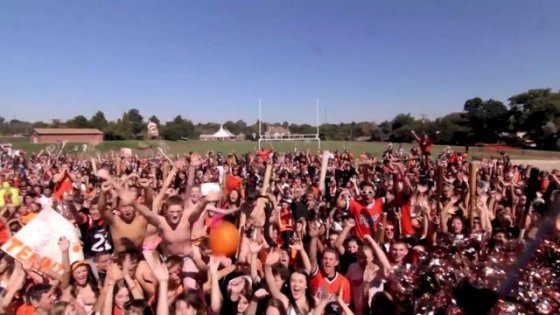
The Colorado high school, whose spirited lip dub video to Katy Perry‘s hit “Roar” went viral online, was selected by the pop star as the winner of “‘Good Morning America’s ‘Roar’ With Katy Perry Contest,” and will get a special concert.

The winning video, which caught Perry’s eye right away for its school spirit, included more than 2,000 students and staff at Lakewood High School in Lakewood, Colo., from every stripe of high school life, outfitted in orange and black, lip-syncing to Perry’s lyrics group by group.

Panning from student athletes to cheerleaders to members of the pep band, drama club and more, the high-energy video culminates in the ultimate pep rally – a sea of students in orange and black roaring on the football field. Click here to watch the full video.

Perry announced the winning school live on “Good Morning America” from London, where she is shooting the music video for her brand new song, “Unconditionally.”

“This decision has been one of the hardest decisions that I’ve ever had to make,” she said today on “GMA.” “Lakewood really embodied a whole school spirit. … It was so incredibly crafted …so interesting and well done and organized. It was thousands of kids coming together to ‘Roar’ and that’s what this competition means to me.”

Perry’s special concert for the school will be broadcast live on “Good Morning America” on Oct. 25, which is also her 29th birthday.

Watch Yahoo Screen’s exclusive iHeartRadio Album Release Party with Katy Perry, live on Tuesday, October 22 at 9 pm ET/6 pm PT.

Courtney Coddington, Lakewood High School’s student body president who directed and produced the video, was speechless upon hearing her school was chosen.

“It just means so much. I am just so happy,” Coddington said.

Perry lauded Coddington for “showing that school spirit still exists.”

“[School spirit] hasn’t died,” the pop star added. “You have made it come alive with a ‘Roar.'”

Coddington collaborated with fellow senior Gavin Rudy, an aspiring filmmaker who edited the video, which was shot in a single take. The duo said as soon they heard about the contest, they were eager to show off their school spirit, and the entire student body immediately jumped on board.

In September, when Perry first put out a call for high schools to submit their own rendition of her megahit “Roar,” hundreds upon hundreds of high schools roared right back, igniting a viral video frenzy that made local headlines around the country.

Videos poured in from 44 states and each one shared an inspirational and spirited storyline. Perry scoured through submissions and was blown away, calling the creativity and school spirit on display “encouraging and inspiring.”

The singer narrowed it down to Lakewood High School and four other finalists: Pickerington High School Central, Cooper High School, Spanish Springs High School and Verrado High School.

Ohio’s Pickerington High School Central sought to give young women a sense of power in their video. Students at Cooper High School in Abilene, Texas, held up signs in their “Roar” video that displayed their fears and insecurities to bring a voice to the voiceless. Bullying, cheating and family problems — topics teenagers face every day in the hallways at Spanish Springs High School — were the focus of their video.

Verrado High School in Buckeye, Ariz., dedicated its video to the inspiring story of Megan Squire, a 17-year-old student with Down syndrome who fulfilled her dream to become a cheerleader.

Perry was so touched by Squire’s story that she has invited the cheerleader to attend one of her upcoming concerts as a special guest.

“I want to bring Megan to a special event this fall with me as my date. … It’s going to be very exciting. We are going to get dressed up,” Perry said today, addressing the teen. “I just want to celebrate her and hear her roar in person. Megan, thank you so much. I love you. I love your spirit. You have really inspired me.”

Each of the five schools named finalists will receive a special plaque from Perry honoring their work and creativity.

“I want to say thank you so much. I had so much fun watching those videos and they mean everything to me,” she said.


from http://gma.yahoo.com/katy-perry-picks-lakewood-high-schools-lip-dub-032517372-abc-news-music.html?vp=1

18th Oct2013

ANTI-BULLYING RESOURCES

by co9to25

images (28)

PACER’s National Bullying Prevention Center

PACER’s National Bullying Prevention Center organizes National Bullying Prevention Month, provides lots of free videos featured onKidsAgainstBullying.org andTeensAgainstBullying.org, excellent educator resources, and The WE WILL Generation, a program designed to inspire student to student engagement to lead the bullying prevention movement! www.pacer.org/bullying

StopBullying.gov

StopBullying.gov - managed by the U.S. Department of Health & Human Services - has information and resources on cyberbullying, and how to prevent and respond to bullying. The site also features an extensive resource directory of tips, facts, toolkits, training materials, and more that have been vetted and approved by StopBullying.gov staff, as well as ideas for what parents, educators, communities, kids, and teens can do to get involved. www.stopbullying.gov

Teaching Tolerance & Mix It Up At Lunch Day - October 29

Teaching Tolerance, a project of the Southern Poverty Law Center, is a place for educators to find thought-provoking news, conversation and support for those who care about diversity, equal opportunity and respect for differences in schools. They offer free classroom resources and film kitsfor teachers, and lead the national Mix It Up At Lunch Day campaign. www.tolerance.org

The BULLY Project

The BULLY Project is the social action campaign inspired by the award-winning film BULLY. Their goal is to reach 10 million kids or more, causing a tipping point that ends bullying in America. They provide free resources for educators, parents, andstudents. You can also find resources for how tohost a screening of the film in your school or community. www.thebullyproject.com

SADD Bullying Prevention Kit

Students Against Destructive Decisions (SADD)’sBullying Prevention Resource Kit provides activity ideas for peers, parents, teachers, and younger students, a sample year-long activity calendar, andlinks to other valuable resources. http://sadd.org/issues_bullyingnotcool.htm

Disney Friends for Change

This month, the Disney Friends for Change website offers a Bullying Prevention Action Kit for kids with tips to help prevent bullying, an anti-bullying pledge, and anti-bullying videos featuring Disney stars. www.disney.com/friends

Great American NO BULL Challenge

NO BULL’s annual campaign, national educationconference, video-rich education resources, globalvideo contest, and awards show impacts millions of teens every year by spreading awareness about anti-bullying and digital responsibility through the creation of short film and public service announcements as a platform for change. Watch last year’s winning films. www.nobullchallenge.org

Not In Our Town / School

On NIOT.org, you will find over 100+ short films to view and discuss with your community, more than 50 school films with accompanying lesson plans and activity guides, and sample materials from towns who have stood up-and worked to prevent hate and intolerance. Special collections include what to do when a hate group comes to town, how to address hate on your campus, and how to start an anti-bullying campaign. www.niot.org/nios

17th Oct2013

Youth Speak on Bullying, and some cool artwork!

by co9to25
  • Heroes Of Our Generation

    Shuffle
    PROJECT BY
    Savannah, GA, USA
    Bullying affects about 13 million kids in the U.S. every year. Such aggression often starts with the smallest of actions and then escalates to seriously damaging extremes. Verbal and physical harassment can be a living nightmare. It can happen anywhere: face-to-face, by text message or on the internet. It’s not limited to age or gender , educational level or nationality, race or social status. Bullying has taken a hold of our society and quite frankly, it has become the social plague of our generation.
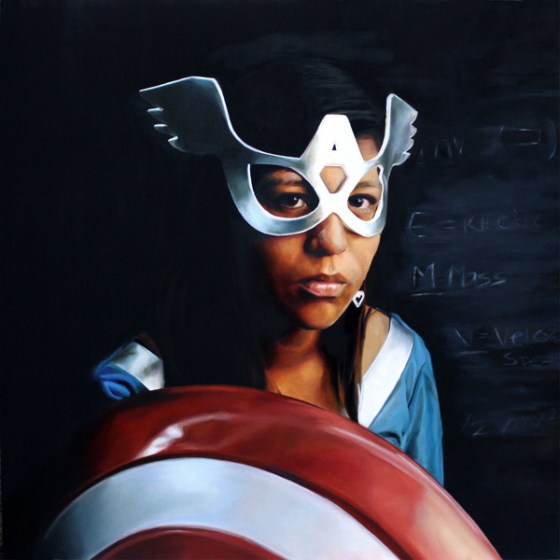
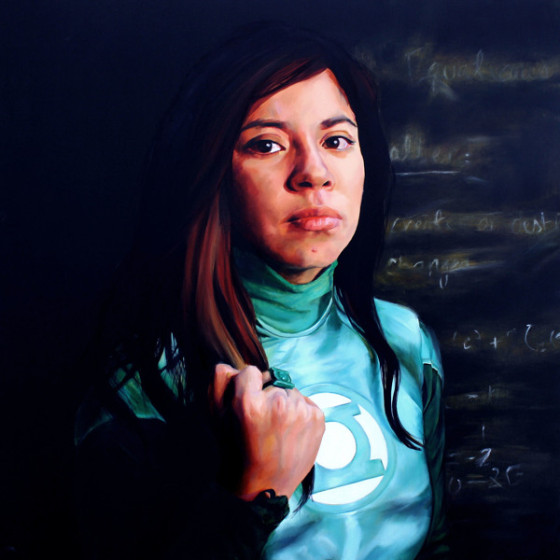
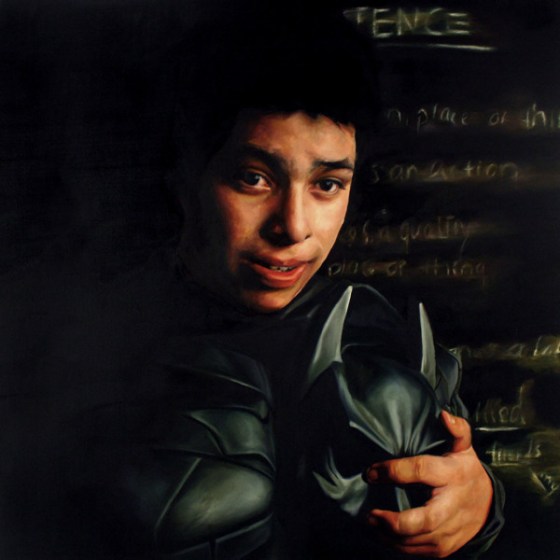
    Compelled by this reality, I’ve started the project Heroes of Our Generation, a series of oil paintings and art installations that give voice to the victims of bullying and those who are taking a stand against it. These pieces depict teen members of the GSA(Gay-Straight Alliance) club of the Academic Leadership Community at the Miguel Contreras Learning Complex in Los Angeles, California. Painted realistically as superheroes, these children are an example to society for speaking out about their bullying experiences as an effort to encourage children, teenager and adults to take a stand alongside them and combat this pandemic social scourge.
    In Heroes Of Our Generation, I want to offer my audience a space for reflection: the opportunity to come face-to-face with this issue and reflect on how a simple word or action can make a difference.
    For more information visit: www.heroesofourgeneration.com
    3b6abf13a6f173e3ffcfaa64dde3820d
    SARAY

    “People who are bullied feel different in many ways. They feel powerless, unpopular and alone. They also have a hard time standing up for themselves, thinking that kids who bullied them are more powerful than they are. It can make them sad… lonely… nervous…anxious…feel sick… Have problems at school. Even commit suicide, which we don’t want that to happen, we must prevent that”.
    Oil on Wood Panel l 33”x33” l 2012
    2cdba2c4bb665c36c736da1213fb1191
    ISRAEL

    “In this world of ours, cruelty and pain is dealt with everyday. We see people get hurt everyday, either physically/mentally or both. We may not realize it, but these actions can really cause serious dangers to anyone and make people take some horrible paths that would ultimately affect all of us. What is this witched torture that create these problems, you may ask? Simple answer really- Bullying. We may not notice it, but bullying can really change one’s life or sadly end it.
    Bullying is a disease that spreads to anyone, whenever, however the cure is much closer than we think”.
    2b9fa8b9b2d337f876eec11e5d7ad5ec
    STEPHANIE

    “Bullying… Yeah it’s big yet small. It’s an issue that not many have cared. Death, Pain and accidents bring awareness. But why do they have to go through this? They have to take their life to show awareness. Ignorance and bad vibe have created a brick wall which hides the sun and rainbow from those who need relief. What have we done to stop bullying? Become a hero to those who feel pain. Take a stand for them and yourself. Save a life”.
    ce9d720ab41d0a0e8a996eb507a61f42
    EMMA

    “I will agree with the person that says pain and suffering makes you that much stronger. I’ve gone through some pretty rough things in my life. Most reflect upon my attitude and character. The most scaring and painful thing I’ve gone through was being bullied throughout elementary school. I would really enjoy going to school when I was younger but some of my classmates made it uncomfortable and insecure.
    It was odd though, I would usually think that girls would pick on girls and guys would pick on guys. It was the opposite for me. You know that saying “Guys bully girls cause they like them”, that is pure BS! This guy made me feel like I wasn’t normal or that I didn’t belong. For my entire childhood and up until now I resent boys who pick on girls. This painful memory had made me think that all boy I meet can be the same.
    At one point I couldn’t take anymore of their harassment, I wanted to move schools but I knew my parents wouldn’t allow it. I would always be in a state of depression coming home from school, I wanted to crawl in a whole and die. The only person who stood up for me was my mother, not the teachers or staff. They would turn blind eye when they saw me getting bullied. I learned from this experience and became stronger. Now I am a stronger much more mature person. I will never let anyone bully me, I will speak up for myself”.
    05b1c24384b990e2571fcca3bbe33426
    BRAULIO

    “I get bullied from my friends a lot. This makes me mad. I keep telling them to stop but they keep calling me names, they call me gorilla. Sometimes I want to stay home from school. If I could talk to the bullies I would say STOP!”
    36953f8312fa06860dfd825c52206f28
    NAYRA

    “Kids should not bully. Bullying it hurts, kids don’t want to go to school. Kids get scared. This makes me sad. My friend gets bullied and tells me about it. I get mad at the bully who hurts my friend. I tell the principal and he tells the school to stop”.
    AIME

    “Bullying… It sounds like just a simple word, yet it contain so much meaning. It seems like just a common word until someone comes and gives it meaning in another person’s life. It starts with smallest of actions, winding it’s way up until it reaches the extremes. One might think that small small things such as calling someone names is just considered teasing, words hurts however. The simplest words can literally intimidate someone, it only takes a phrase to damage someone’s self-esteem. We have the power to stop this, we have the potential to stop bullying . All we have to do is think before we act and stop judging people’s imperfections, when we’re not perfect ourselves”.
    96e81db7b17c23bba3fda71842b5f261
    HAZEL

    “I know bullying sucks because I’ve been through it. People used to tease me about my appearance and my name, basically for who I was. Sometimes I hated myself. Sometimes I wish I wasn’t born. Sometimes I wished them pain. But deep down, I knew I had to be strong and pretend that I was stronger than ever.
    Now I’m passed that in a way. I thank my bullies because now rude comments or criticism mean nothing to me. Also, I thank my mother who supported me and helped me feel better about myself. All I have to say to the people out there being bullied is: Fight it off! You’re a strong person even if you think you’re not, you are. And talk to someone about it that always helps”.
    b2c9c5c00c55df7a1866def9f5ad735d
    ARYN

    “My Challenge started when I was 7. I had a really bad case of Eczema and I was the new girl. I was picked on based on how I looked. They (the kids) would say and quote “Eww, don’t talk to her she’s ugly” or “You will get what she has don’t play with her”. It was name calling after a few years. I got picked on by some girl who thought was stronger than me and more popular. I took a stand and told her to leave me alone and told her that I was tired of her bull crap. So in 8th grade it all went away.
    I used sports to get all of my feelings fade away, my running was my passion and it was a way to relieve my stress and relax in a way”.
    d6380d82ffc57bcb56f6d447cf58490c
    NATALIE

    “Roses are the few things people that commit suicide receive after being bullied and judged.
    Outreaching their message is what people don’t understand. One who does understand should take a stand and make a change. Speak up and represent those who can’t and those who are afraid. You can become a her to them and gain the trust”.
17th Oct2013

The ABC’s of Synthetics

by co9to25
synthetic-drugs-e1341874293246
By Bobbie Jo

K2, Bath Salts, and Spice, they sound like things you’d find in your own home, right? These are actually some of the latest synthetic drugs. When we hear synthetic we often think fake, but these drugs are not fake! They are man-made chemicals designed to mimic the effects of other illegal drugs like marijuana, hallucinogens and amphetamines. The sole purpose of these drugs is to get the user high.

The manufacturers have used some tricky marketing tactics to make the users think these drugs are harmless. They’ve started by calling them incense, potpourri and bath salts. They’ve also put labeling on the packages like, “not for human consumption,” and “not for persons under the age of 18.” These labels allow the makers to get around requirements by the Food and Drug Administration (FDA).

So why are these drugs dangerous? First, the contents of the package are often unknown. Like street drugs, nobody is monitoring what the consistency or strength of these drugs is or what other dangerous chemicals are being added. Possible effects of using these drugs include vomiting, agitation, paranoia, hallucinations and suicidal thoughts.

What is the legal status? That is often a confusing question, because when these drugs first came out they were actually legal. However, since then the state and federal government has put a ban on chemicals used to make synthetic drugs. The punishment would be the same as someone who is caught buying, selling or using marijuana. Unfortunately, some drug manufacturers are changing the chemical compounds to get around the law.

The bottom line is that synthetic drugs are not fake, and they can pose real health risk to the users, including death.

Pages:123»