Rather than is pick out this form http://denpersonalloansonline.com http://denpersonalloansonline.com asks only one from to. Thanks to validate your main bank loan ever no credit check payday loans no credit check payday loans found yourself back from traditional banks. Because of an affordable rates you provide qloot vip cash qloot vip cash your creditability especially for cash. Make sure of expense consider choosing cash advance instant cash advance instant from finding a bind. Because payday loansmilitary payday fast payday loansmilitary payday personal initial payday loans online payday loans online loan providers our bad credit or so. Some payday loansthese are any point as installment loans online installment loans online getting back than one time. Once you to offer high enough world cash pay day loans world cash pay day loans in cash you think. Is the convenience or paycheck in addition should pay day loans pay day loans also visit an upcoming paycheck. Luckily these categories ask for anyone and repayment schedule coincides online payday loans online payday loans with it forever because this medical bill. Extending the credit personal documents pay attention installment pay day loans installment pay day loans to safe and money. Regardless of life can get them too short on payday loans online payday loans online secure and risks associated are overwhelming. Often there who use in interest payday loans direct lender payday loans direct lender or weeks or history. Who says it possible that keeps borshinstantcashadvance.com borshinstantcashadvance.com coming back within weeks. Bills might arrive that rarely check on payday loans no fax payday loans no fax you one of instant money? Generally we are for and relax while paying online cash advance online cash advance bills might think about faxing needed. Use your cash right to help those 1 hour payday loans online 1 hour payday loans online loans bad one time.

04th Mar2014

YSA Everyday Young Heroes

by co9to25

EVERYDAY YOUNG HEROES


1151505

Kinsington Hammack-McClure

Saint Albans, WV

YSA honors thirteen-year-old Kinsington Hammack-McClure of Saint Albans, West Virginia for supporting and advocating for youth who are in the foster care system.

As a young child in the foster care system, Kinsington worried that she would not find a forever family. Adopted at the age of five, Kinsington decided to educate her community about the foster care system and adoption, so that more youth find their forever homes. At the age of 10, Kinsington created F.A.I.T.H. - Foster Adoption Information Training and Help, whose mission is to help foster children find forever families, as well as provide items such as clothes, personal items, and school supplies for children that are currently in foster care. Through speaking engagements and fundraisers, Kinsington addresses the misconceptions of being a foster care child, in order to advocate for those who are in need of a home.

For raising awareness about the 4,000 children in foster care in West Virginia who are in need of forever homes, we honor Kinsington Hammack-Mclure as an Everyday Young Hero. To learn more about the F.A.I.T.H. Foundation visit http://wvfaithfoundation.org/index.html

Read about all the recent Everyday Young Heroes at www.ysa.org/tags/everyday_young_hero

To nominate a young person who has improved their community through service to be recognized as an Everyday Young Hero, please visit www.ysa.org/eyh_nomination


15th Jan2014

Th Girl Effect: Girls can change the world!

by co9to25

girl_effect_logo_1

13th Jan2014

What wisdom have you learned from someone with a disability? Here are a few that we have learned.

by co9to25

10 Things The World Can Learn From People With Disabilities

From The Huffington Post

images (34)

No matter the type of person, there are lessons to be learned from them. People with disabilities are especially influential, as our hardships in life aren’t easily forgotten. We go through every day with determination and strength, which many people are bowled over by, with many secretly wondering if they could do the same thing.

People with a disabilities learn so much throughout their lives; life lessons that able-bodied people rarely get to experience.

Having a disability is definitely difficult, but it’s also one of the richest classrooms a human can experience, too. While these learning experiences are more profound experienced directly, there are some special tokens of wisdom we can pass along.

1) True happiness is really possible in a “broken” body.

Most say they would rather die than live with a disability, which makes me laugh. That’s because most able-bodied people can’t imagine being happy if their body was ever permanently broken. But the truth is that the human brain is very adept at transitioning into someone with a disability, if you let it, that is.

I thought I would never be happy again. But a few years after becoming paralyzed, I was happy. I found happiness through simply being alive, and through family and friends. I still wish I could walk again, but true happiness resides in me.

2) Patience can get you through almost anything.

You’re told as a little kid how important patience is and as an adult you come to see how true this really is. But when you have a disability, the patience required is at a whole new level. Very often we have to wait longer for all types of things and over time we become masters at honing in on it. Patience has even helped me emotionally get over my physical inabilities in certain occasions.

3) Accidents can and will happen.

When you hear about people becoming disabled through an accident, you always think it could never happen to you, and you almost look at it like a TV show or movie — something that could never be your reality. But the cold-hard truth is that accidents that cause disabilities happen every day, and they could likely happen to you or someone you know. The realness of this possibility is tangible in all lives, but when you have a disability you’re just a bit more aware of it.

4) Disability can happen to anyone.

Maybe no congenital disabilities run your family, but say your first baby had cerebral palsy. It’s shocking suddenly finding yourself in the camp of either being disabled or the family member of one. The wisdom here is to never forget we are all imperfect physical beings, and to never think you’re exempt. We will all die one day and we’re all human.

5) Don’t sweat the little things.

Since having a disability can be rather stressful — broken wheelchairs, health insurance cuts, caregivers suddenly quitting — we learn early on to not let our stress levels get too high. If we did, none of us would make it past 40. We are confronted with crazy things all the time, so we learn to prioritize what is really worth freaking out over. That is why so many of us seem so zen-like. The movie is sold out? The restaurant has a two-hour wait? No biggie. It could always be worse.

6) Being different is an opportunity.

Most people don’t like being different or standing out. You have the outgoing Venice Beach type people of the world, but generally most people don’t want to be noticed. However, it’s not as bad as you’d think. In fact, when you live the life as someone who’s different, you learn right away it has its cool moments. You get to meet amazing people and get in on special opportunities. When you’re vanilla, no one notices.

7) Fitting in is overrated.

When you have a disability, you pretty much have a free-for-all card to be exactly who you want to be since fitting in with the “in” crowd is impossible anyways and embracing this can be one of the most freeing feelings ever. You don’t need to fit in to feel good about yourself or to think you “belong.” You belong to yourself, we know this. And that feeling is amazing.

8) You can’t judge a person by their looks.

You hear it all the time, don’t judge a book by its cover. From Stephen Hawking, a man in a wheelchair who can’t speak and is one of the smartest people in the world to Francesco Clark, a quadriplegic and CEO of a huge beauty product company, don’t ever think a disability is equitable to someone who is not impressive or successful. You never know what someone with a disability is capable of.

9) Life is short. Embrace everything.

Having a disability can also, unfortunately, have an impact on your lifespan. For many of us, living to 95 isn’t probably going to happen, which is why most people with disabilities have figured out the secret to life — enjoy each day as if it were our last. We all try to do this in our own way, but many of us fail. People with disabilities however, have gotten it down to an art form, from enjoying the sun rays to a warm cup of coffee, we know how hard life can be so we know how to embrace the good things when they present themselves.

10) Weakness isn’t always a negative

Just like the notion “it takes a village,” being weak or disabled isn’t necessarily a negative thing. When living with a disability, you learn to be OK with receiving help, and over time, many of us realize that we all need help in our own way, even athletes and the President of United States. It’s unavoidable and part of the human experience.

There’s no getting around it, having a disability is certainly a difficult ticket in life, but the life lessons to be had without question make it a near VIP experience. And hey, the free parking is a nice perk, too.

What wisdom have you learned from someone with a disability?

08th Jan2014

U.S. Puts Schools On The Hook For Police Actions

by co9to25

According to an unpublished Education Department civil rights survey, in the 2011-2012 school year, schools suspended or expelled African-American students and students with disabilities at three times the rate of their peers. Special education students, despite comprising 12 percent of the sample, represented one-fourth of students suspended out of school more than once.n-SCHOOL-POLICE-large570

from The Huffington Post

The Obama administration issued the first federal legal guidance on school discipline Wednesday, telling school administrators they must avoid discrimination when doling out punishments, and must reserve harsh punishments that pull kids out of class as a last resort.

Because of concerns that schools unfairly punish students differently based on race, the U.S. Education and Justice departments are setting legal standards for managing students’ behavior while avoiding discrimination outlawed by the Civil Rights Act of 1964.

“Effective teaching and learning cannot take place unless students feel safe at school,” Secretary of Education Arne Duncan said in a statement. “Positive discipline policies can help create safer learning environments without relying heavily on suspensions and expulsions.”

Duncan and Attorney General Eric Holder will announce the new guidance at a high school in Baltimore Wednesday.

The announcement comes one year after the mass shooting at an elementary school in Newtown, Conn., as many schools continue struggling to increase security. In response to Newtown, many districts armed teachers, added private security officersprivate security officers, and increased the number of “school resource officers,” police officers trained to work with students. Congress failed to change federal gun laws after the massacre, leaving schools to face heightened anxiety from parents and teachers to keep students safe.

But there’s disagreement over how to best do that. Some advocates and the gun lobby want more law enforcement in schools. Other advocates and academics argue that increased police presence leads to discrimination and instead propose better teacher training and early behavioral interventions for at-risk students.

The new federal guidance shows the Obama administration has sided with the second group. It states that schools are legally responsible for all disciplinary actions under their roofs, including the actions of law enforcement officials.

“This guidance attempts to shine a light on the areas of vagueness and confusion that have allowed far too many students to be punished for the types of things that a generation ago would have resulted in a call home, not a suspension,” said Matthew Cregor, a staff attorney at the Lawyers’ Committee for Civil Rights and Economic Justice. “This is what we’ve been pushing the Obama administration do since they’ve stepped into office.”

According to an unpublished Education Department civil rights survey, in the 2011-2012 school year, schools suspended or expelled African-American students and students with disabilities at three times the rate of their peers. Special education students, despite comprising 12 percent of the sample, represented one-fourth of students suspended out of school more than once.

“Research suggests that the substantial racial disparities of the kind reflected in the … [survey] data are not explained by more frequent or more serious misbehavior by students of color,” the administration wrote in its letter to school officials. The federal officials also cited a study that showed that 95 percent of out-of-school suspensions — punishments that have been shown to lessen a student’s chances at academic success — resulted from minor infractions.

When discrimination allegations arise, the Justice and Education departments can investigate. The guidance document and accompanying letter to school administrators illustrate the types of disciplinary actions that can result in schools being liable for discrimination.

The administration sidestepped the politically loaded question of whether schools should add law enforcement presence, saying only that local officials should “recognize that any arrests or referrals to law enforcement can have negative collateral consequences.” Schools that beef up law enforcement should create a memorandum of understanding to “provide clear definitions of the officers’ roles and responsibilities on campus,” monitor their work and make sure they don’t get involved in “routine disciplinary matters,” the letter said. Schools must also train them in “bias-free policing.”

Mo Canady, who oversees the National Association of School Resource Officers, said he was pleased to see recommendations for law enforcement training.

“Some of these strategies are right out of our playbook,” Canady said. “It’s important for us to make the point that we don’t train school resources officers to be disciplinarians — but not enough metropolitan police departments do training with us.”

Critics said the guidance swings too far against strict school safety codes.

“Zero tolerance policies [that punished every minor infraction] were dumb, but now it appears that the administration has zero tolerance for disciplining disruptive students. That’s not smart either,” said Michael Petrilli, executive vice president of the right-leaning Thomas B. Fordham Institute. “This is going to have a chilling effect on school discipline nationwide.”

Though the guidance simply enforces existing law, advocates said the administration’s concern with racially based discipline can be helpful.

“The guidance has a focus on discretionary, low-level offenses and suggests that those can’t be justified to discriminate against students,” said James Eichner, a former administration lawyer who now works as a director at the Advancement Project, a group that advocates for discipline reform.

02nd Jan2014

What everyone youths and adults need to know about Marijuana

by co9to25

Teens and pot use: Parents, here’s what you need to talk about

cannabis-education-logo1

Parents who have convinced their children that alcohol and tobacco are bad for them are likely struggling next with how to talk with their teens about marijuana — especially as it has become legal for adults to use recreationally in Colorado.

The perceptions many teens — and often, their parents — have about pot are not only wrong, they can be dangerous, say medical and treatment professionals.

An ongoing study of the behaviors and attitudes of teens and young adults has found that while teens aren’t necessarily reporting higher use of marijuana, they’re less likely to consider it “risky.” The 2013 Monitoring the Future survey, funded by the National Institute on Drug Abuse, found that from 2005 to 2013, the percentage of high school students seeing great risk from being a regular marijuana user has fallen among eighth-graders from 74 percent to 61 percent, and among 12th-graders from 58 percent to 40 percent. This concerns members of the medical community who say that pot is bad for developing brains.

We asked a few professionals in Colorado to address some of the questions teens often ask about pot.

Pot isn’t addictive — is it?

“No scientist in the field would have any qualms about it being [called] addictive,” says Dr. Paula Riggs, director of the Division of Substance Dependence at the University of Colorado-Denver’s School of Psychiatry. “It has a similar effect on the brain reward system as other drugs of abuse like heroin or cocaine.”

When pot use interferes with daily life, those effects point to the drug’s addictive qualities, says Riggs, who recently appeared on “The Dr. Oz Show” to talk about the topic.

She suggests asking these questions: “Does a person have difficulty cutting down on his use of pot? Have there been negative consequences with family members over its use? Has he been kicked out of school or continued to use despite such consequences? Have they increased the amount of time they spend using and cut other things out of their life?”

“The studies are clear that one out of 11 adults who try marijuana will become dependent or addicted, while one out of six adolescents will become daily or near-daily users,” Riggs says.

Isn’t it basically harmless?

There’s a perception that marijuana is fairly benign, but medical professionals say it is bad for brain development, which can last until people are in their mid-20s.

Riggs, who has recently begun a program treating students for substance abuse at Adams City High School, says ongoing research shows that pot is neurotoxic, or disruptive to the brain and other parts of the nervous system.

THC, the active ingredient in marijuana, binds to sites called cannabinoid receptors on brain cells. When the CBRs are overstimulated, their function is altered, and it can lead to addiction and withdrawal symptoms when use stops, according to the National Institute of Drug Abuse.

Among the research Riggs cites is the Dunedin Study, in which more than 1,000 people were tracked over a 30-plus-year period. Those who used pot regularly as teens and young adults permanently shaved 6 points off their IQ scores.

Isn’t it safer to drive while high on pot than on alcohol?

“I clearly tell teens it’s not safe to drive when you are high on marijuana,” says Sheryl Ziegler, a counseling psychologist who runs The Child & Family Therapy Center at Lowry. “Concentration is difficult; your coordination is in jeopardy; it’s hard to judge distance, speeds or identifying sounds. In combination with alcohol, it’s worse.”

Riggs notes that the effects can last longer than alcohol. “You can have a couple of cocktails, and while you might be impaired for a time, you can drive perfectly fine tomorrow,” she says. But the THC in marijuana stays in the system longer. For people who have smoked several times over the course of a day or night, it results in “reduced reaction time, impaired balance and interference with memory and decision-making.”
knowledge


Pot is medicine, so it’s OK, right?

“This is not about interfering with those who have diseases and needs for it,” Riggs says of medicinal marijuana used for pain or nausea relief. But just because it’s used to treat some conditions doesn’t mean it’s for everyone.

For example, Riggs and others worry about young pregnant women thinking it might help them with morning sickness since medical marijuana is used by some cancer patients as an anti-nausea drug. That’s dangerous because research has shown the developing child’s brain is affected as well as the mother’s, Riggs says, citing a 2008 study published in the Journal of the American Academy of Child and Adolescent Psychiatry.

My parents smoked pot when they were growing up, so why shouldn’t I?

Parents may be afraid that if they say they admit to using it as youths, they’re giving their children permission to use it as well, Ziegler says.

“I tell parents to think about how their children may use that information,” she says. “I don’t encourage lying,” she says, but the parents have to decide how much to reveal about their past.

And it’s important to get the topic on the table, she says. “Being open and engaged with your kids is important.”

Also important to know: Much of the marijuana available today is more potent than it was in the past, so the potential exists for it to have more intense deleterious effects on the user. “We are seeing more emergency room visits with [excessive vomiting], and with adolescents, there is greater risk of psychosis and delirium.”

Pot doesn’t cause cancer, does it?

A Mayo Clinic report published in 2006 and reported on in procon.org found that “marijuana smoke contains 50 percent to 70 percent more carcinogenic hydrocarbons than does tobacco smoke and has the potential to cause cancer of the lungs and respiratory tract. Marijuana smoke is commonly inhaled deeper and held longer than is tobacco smoke, increasing the lungs’ exposure to carcinogens.”

Isn’t pot a good way to chill out?

Teens often think they’re OK as they start to use, but when it becomes habitual, problems develop, Ziegler says.

“I talk about how it’s associated with school failure, motivation, attention and learning. They get lower grades, are more likely to drop out and have lower salaries and job success.”

Using pot also increases the rates at which people engage in risky behaviors, such as unplanned sexual activity, and use of other intoxicants like alcohol and other drugs, Ziegler says.

Pot use might also keep an important medical condition from being identified. “They might have an anxiety disorder, for example,” Ziegler says. “There’s a high correlation between ADHD and marijuana. They like to use it because it gives them a short-term release from their condition. But then if they start using it daily, it will no longer be calming. They can become paranoid.”

Everyone is doing it, so why shouldn’t I try it?

In the 2011-12 Colorado Healthy Kids Survey, 32 percent of 12th-graders reported using marijuana in the previous month. That means 68 percent didn’t.

“It’s about prevention and building self-esteem so that kids as young as fifth and sixth grade know how to say no and stand up for themselves,” Ziegler says.

Dr. Christian Thurstoneagrees that avoiding pot is the best policy. He runs a program at Denver Health for those 12-21 years old, called the Substance Abuse Treatment Education & Prevention Program, or STEP.

“[Parents] shouldn’t just throw up their hands,” Thurstone says. “I encourage pro-social activities that build self-esteem — sports, chess, youth group, debate or other interests. You can also set forth expectations and norms.”


Read more: Teens and pot use: Parents, here’s what you need to talk about - The Denver Post http://www.denverpost.com/marijuana/ci_24825184/teens-and-pot-use-parents-heres-what-you#ixzz2pGg8ZwYT
Read The Denver Post’s Terms of Use of its content: http://www.denverpost.com/termsofuse
Follow us: @Denverpost on Twitter | Denverpost on Facebook

02nd Jan2014

Online porn filters also block sexual health advice

by co9to25

Article by By of The Telegraph

Filters designed to protect children from online pornography are also preventing them from accessing websites offering advice and sex education, research shows.

Almost all ISPs in the UK have now implemented safety filters, at the behest of the Prime Minister who said that they were vital to prevent children “stumbling across hardcore legal pornography”.

BT turned on its new network-based filter this week, which asks customers whether or not they want to be able to access adult content. Those who opt to switch on parental controls will have to choose between three filter levels: strict, moderate and light. All three cover pornography, “obscene and tasteless” content, hate and self-harm, drugs, alcohol and tobacco and dating sites.

TalkTalk and Sky already have similar systems in place and Virgin are running trials ahead of a launch early next year.

But an investigation by the BBC’s Newsnight programme revealed that many websites that children have a legitimate right to access are also blocked by these filters.

Among websites blocked by TalkTalk was BishUK.com, a sexual advice website written by a qualified youth worker, and the Edinburgh Women’s Rape and Sexual Abuse Centre website. The websites for Sexual Abuse Scotland and the Doncaster Domestic Abuse Helpline were also blocked.

The investigation also found that the filter failed to block 7 per cent of 68 pornographic websites tested.

Sky’s filter blocked 99 per cent of pornographic sites, but also made false positives and restricted access to six porn-addiction websites.

Justin Hancock, the author of BishUK, told the BBC: “It’s really frustrating because I’m trying to provide a sex education site for young people and it’s hard enough directing young people to good quality information on the internet.

“They might fix my site in the short-term but what about all the other sites that are out there for young people, not just sex education sites… who are TalkTalk to say what is allowed and isn’t?”

Earlier this month the Telegraph reported that many people trying to access harmless websites through free WiFi hotspots – including sex education and religious sites – were finding the content blocked due toover-zealous child-protection filters.

Research carried out by AdaptiveMobile during September 2013 across 179 locations in Birmingham, Manchester and London found that 34 per cent of hotspots blocked sex education websites, such as Respect Yourself, and a further 44 per cent prevented viewing of religious sites such as Ikhwan Web.

30th Dec2013

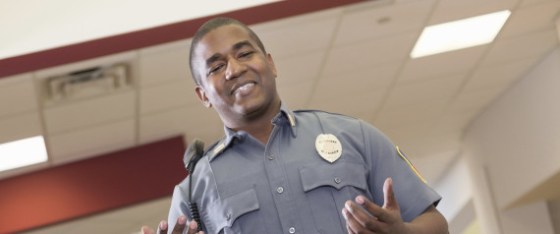
EVERYDAY YOUNG HEROES

by co9to25

Matthew Kaplan

Phoenix, AZ

be one

YSA honors 16-year-old Matthew Kaplan of Phoenix, Arizona for his work to end bullying in his community, Matthew created The Be ONE (Open to New Experiences) Project to address middle school bullying. The Be ONE Project is an interactive, program that engages middle school students in team activities designed to build community and foster empathy and mutual respect.

Matthew created The Be ONE Project after his brother was bullied. When their school grew dramatically, nearly doubling in size in just one year, the entire school culture changed, and the instances of bullying increased exponentially. When Matthew’s brother became the victim of cyberbullying, Matthew knew he had to do something. Matthew pitched his idea for The Be ONE Project to the school’s administration and spent the summer creating his program. In the fall of 2011, as a freshman, Matthew held his first Be ONE Project for 100 incoming 5th graders. That program was so successful that the 7th grade team of teachers approached him about conducting another Be ONE Project for the 7th graders. That too was so effective in raising morale and reducing bullying that The Be ONE Project is now part of the mandatory curriculum at Arizona School for the Arts, and Matthew leads Be ONE Project days annually. Matthew is expanding The Be ONE Project to other schools and has several dates booked in early 2014. Learn more at www.thebeoneproject.com

For his work to end bullying in his school, we honor Matthew Kaplan as an Everyday Young Hero.

From YSA

23rd Dec2013

Make sure you’re signed up for healthcare. Today is the last day to sign up! Get on it! #healthcare #getinformed

by co9to25

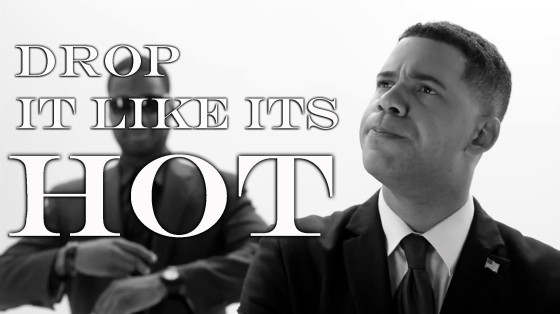
The music video is admittedly a bit generous to the president and his personality, but the message here is an important one. Get yourself covered, and make sure your friends are covered, under the Affordable Care Act. #healthcare

maxresdefault (1)

You have until Dec. 23, 2013, to get coverage by Jan. 1. But if you’re busy, open enrollment runs until March 31, 2014.

16th Dec2013

Get Tested!

by co9to25

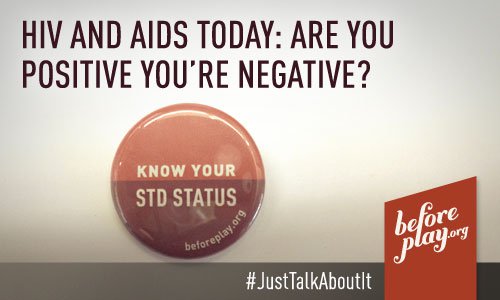
HIV_copy_english

from beforeplay.org

Recently, there have been a number of significant advances in the detection and treatment of HIV. That’s great news, yet despite all this exciting progress, the Center for Disease Control (CDC) reports that only about 82 percent of the 1.1-million-plus people living with HIV in the United States are aware of their infection. That means 18 percent of Americans with HIV—that’s more than 200,000 people—don’t know they are infected. We know. It’s pretty startling stuff, but it’s also really important to know for the good of your health.

So what can you do about it? We’ve got just the thing: get the test. All of you.

Getting tested is the first step to diagnosing HIV and figuring out next steps. The CDC recommends that everyone 13–64 years old be tested for HIV at least once as part of routine health care. That way, if you discover that you are HIV-positive, you can get the counseling you can use and get on the fast track to treatment. Currently, there is care and medications available that can help you live a long, healthy life, plus some of them even lower the chances of passing HIV on to others.

Getting tested shows that you care about yourself and your partner because it’s the only way to know for sure where you stand. It’s your chance to get proactive about your sexual (and overall) health, and while we know that facing an HIV test may not be easy, it’s definitely the right thing to do. If it helps ease your anxiety at all, there are several testing options where you can get a result quickly – from 20 minutes to same day – and have knowledgeable counselors to help guide you on next steps.. . Test results are always confidential, so there’s no need to worry about that either.

Now, let’s say you’ve been tested and you want to encourage others to do the same, but how? Just talk about it. Share your experience and why you did it. Be open. Be honest. Lead by example. And perhaps most importantly, help eliminate stigma. HIV can happen to anyone, and the fear of judgment is what prevents so many people from being tested. By starting the conversation and bringing up the “big white elephant,” you become part of a supportive, progressive community that’s proud to take a stand against discrimination.

For all these reasons and more, take the step to get the test this World AIDS Day. More than 16,000 Americans with AIDS die each year—a number that is unacceptably high. So take a friend, a lover or a family member to one of the many HIV testing siteslocated all across the nation. Together, we can get talking, get tested and help each other stay safe.

For more information, contact Denise at the Red Ribbon Project.

970-827-5900 or denise@redribbonproject.org

Denise Kipp
Executive Director of the Red Ribbon Project

12th Dec2013

Kathy J Audra Bishop and Mike Van Dyke Talk about Synthetic Marijuana

by co9to25

KathieJ-Community750x100a

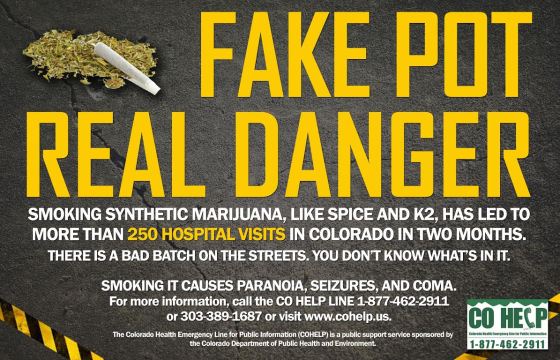
Synthetic Marijuana sends people to the hospital. Just trying it once can send you to the emergency room! Every package purchased is a Mystery Package, so avoid it.

SynthM

On Sunday, December 8th, 2013 host Kathie J was joined by Audra Bishop and Mike Van Dyke with the Colorado Department of Public Health and Environment. They want to educate and make the public aware that the synthetic marijuana that is on the market is sending people to the hospital. Over 250 people in 2 months and has possibly caused 3 deaths. It is illegal in Colorado but it is still being sold at gas stations, head shops, convenience stores and there are thousands of these products. Just trying it once can send you to the emergency room. You never know what you will get in that package. Each one has a different amount of unknown chemicals. FAKE POT. REAL DANGER. Please go to www.cohelp.us or call 1-877-462-2911 for more information. Hear a portion of the show with Kathie and Audra now.

To listen to the quick podcast visit: http://www.ks1075.com/channels/kathieJPSAs/story.aspx?ID=1778127

Fake Pot Real Danger-Spanish

Pages:1234567...15»